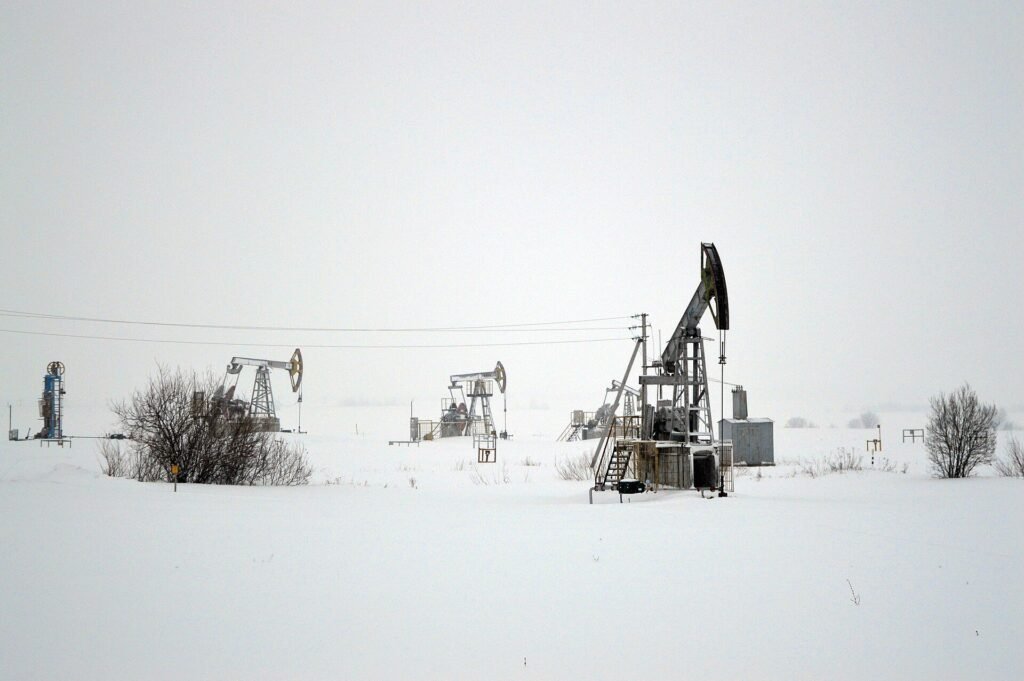

Most Russian oligarchs made their money by taking ownership of large Soviet-era industrial firms in the 1990s, mainly in oil, metals and mining. For a World Bank study, researchers found that 22 owner groups controlled about 40 percent of a sample of Russian firms, measured by employment or sales (Guriev and Rachinsky, Journal of Economic Perspectives, 2005). Of the 35 people profiled on this site whom Forbes lists, it still places 15 in metals, mining, steel, oil, gas or refining, as the sector table shows.
Two routes to a fortune
Guriev and Rachinsky 2005 describe two groups. The older oligarchs came from the Soviet nomenklatura: they had managed the enterprises, or supervised them in government agencies, and “converted their de facto control into ownership rights” when the firms were privatized. The younger ones started in the late 1980s and built their first wealth during Gorbachev’s partial reforms, when regulated and market prices existed side by side and created “huge opportunities for arbitrage” (Guriev and Rachinsky, Journal of Economic Perspectives, 2005).
Prices were freed on a single date. Boris Yeltsin signed the price liberalization decree on 3 December 1991, and it entered into force on 2 January 1992. Inflation reached 245.3 percent in January 1992 and 2,508.8 percent over the whole year (TASS, 2 December 2016).
Loans-for-shares in 1995
In the loans-for-shares program the government handed stakes in 12 large state-owned companies to certain businessmen to manage in trust, in return for loans to the federal budget of about $800 million. The companies included Surgutneftegaz, LUKoil, Yukos, Sidanko, Sibneft and Norilsk Nickel. The government did not repay the loans by September 1996, and the creditors sold the stakes, “usually to themselves” (Treisman, NBER Working Paper 15819, March 2010). Treisman concludes that the execution of the scheme “appeared corrupt”, and he notes that winning the support of the new business elite “was thought crucial to Yeltsin’s reelection” (Treisman 2010).
The research is more differentiated than the common story. Treisman finds that the stakes were a small fraction of the market, that pricing in most cases was in line with international practice, and that the biggest beneficiaries were Soviet-era industrial managers rather than the so-called oligarchs. He also finds that the oligarchs’ firms performed better than comparable state enterprises and helped fuel growth after 1999 (Treisman 2010). Guriev and Rachinsky 2005 say the program fits Abramovich (as a junior partner of Berezovsky), Khodorkovsky and especially Potanin, but “most of those listed in Table 1 did not become oligarchs through the loans-for-shares program.”
Which sectors the profiles on this site are in
The table groups the people profiled on this site by the industry label that Forbes gives on each person’s profile, recorded on 18 October 2026 (Forbes real-time billionaires). The grouping by the first label is ours; the label itself is shown in brackets. It is a count of profiles, not a ranking by wealth. Forbes lists 35 of the 37 people; it gives no label for Igor Sechin (Rosneft) and Sergey Chemezov (Rostec), who head state companies. The label “Investments” does not say in which sector a fortune began. The labels for every person are also in the Russian Oligarchs Tracker.
| Sector | Profiles (Forbes label) |
|---|---|
| Metals, mining and steel (11) | Alexander Abramov (Steel, mining), Suleiman Kerimov (Gold), Vladimir Lisin (Steel, transport), Alexey Mordashov (Steel, investments), Alexander Nesis (Metals, banking, fertilizers), Vladimir Potanin (Metals), Dmitry Pumpyansky (Steel pipes), Viktor Rashnikov (Steel), Anatoly Sedykh (Steel pipes), Eugene Shvidler (Metals, investments), Andrei Skoch (Metals and mining) |
| Oil, gas and refining (4) | Vagit Alekperov (Oil), Airat Shaimiev (Refinery, chemicals), Radik Shaimiev (Refinery, chemicals), Gennady Timchenko (Oil, gas) |
| Fertilizers (2) | Andrey Guryev (Fertilizers), Andrey Melnichenko (Fertilizers, coal) |
| Construction, property and building materials (6) | Samvel Karapetyan (Real estate), Sergei Kolesnikov (Building materials), Arkady Rotenberg (Construction, pipes, banking), Boris Rotenberg (Construction, pipes, chemicals), Igor Rybakov (Building materials), Alexander Svetakov (Real estate) |
| Banking (2) | Andrei Kosogov (Banking), Oleg Tinkov (Banking) |
| Investments (7) | Farkhad Akhmedov (Investments), Gleb Fetisov (Investments), Andrei Komarov (Investments), Anatoly Lomakin (Investments), Igor Makarov (Investments), Mikhail Prokhorov (Investments), Andrei Rappoport (Investments) |
| Other (3) | Dmitry Kamenshchik (Airport), Eugene Kaspersky (Software), Igor Kesaev (Tobacco distribution, retail) |
Metals, mining and steel is the largest group, with 11 of the 35 people Forbes lists.
What governments say about ties to the Kremlin
Not every fortune came from the 1990s. Governments that sanction businessmen name state proximity as a reason. On 13 May 2022 the UK government said that Vladimir Putin “relies on his network of family, childhood friends, and selected elite who have benefited from his rule and in turn support his lifestyle” (UK government, 13 May 2022). This is a statement by a government at the time of a sanctions announcement, not a court finding, and it applies to the people named in that announcement. Which individuals are sanctioned by which country is covered in Who Are The Russian Oligarchs Sanctioned?, and current Forbes figures are in Russian Oligarchs Tracker: Net Worth and Sanctions.
About this article
This article was rewritten and checked on 13 November 2026. Every statement is linked to the source it comes from; the sources are listed below. Corrections follow our editorial policy.
Sources
- Guriev, Rachinsky: The Role of Oligarchs in Russian Capitalism, Journal of Economic Perspectives, Winter 2005
- Treisman: The Loans-for-Shares Auctions Revisited, NBER Working Paper 15819, March 2010
- TASS: Price liberalization in Russia, 2 December 2016
- UK government: UK sanctions the shady network funding Putin’s lavish lifestyle, 13 May 2022
Correction, 13 November 2026: An earlier version of this article gave the date price controls were lifted as December 1991; they were lifted on 2 January 1992. It said that future oligarchs bought privatization vouchers at deep discounts and kept companies because they had committed to supporting Yeltsin’s reelection; the sources do not support that account. It also made general statements about corruption, organized crime and capital flight for which it named no source, and a passage on an alleged organized-crime figure described him wrongly as an oligarch. These statements have been removed.
Articles You Might Enjoy Reading
Why Do Russian Oligarchs Have Yachts?