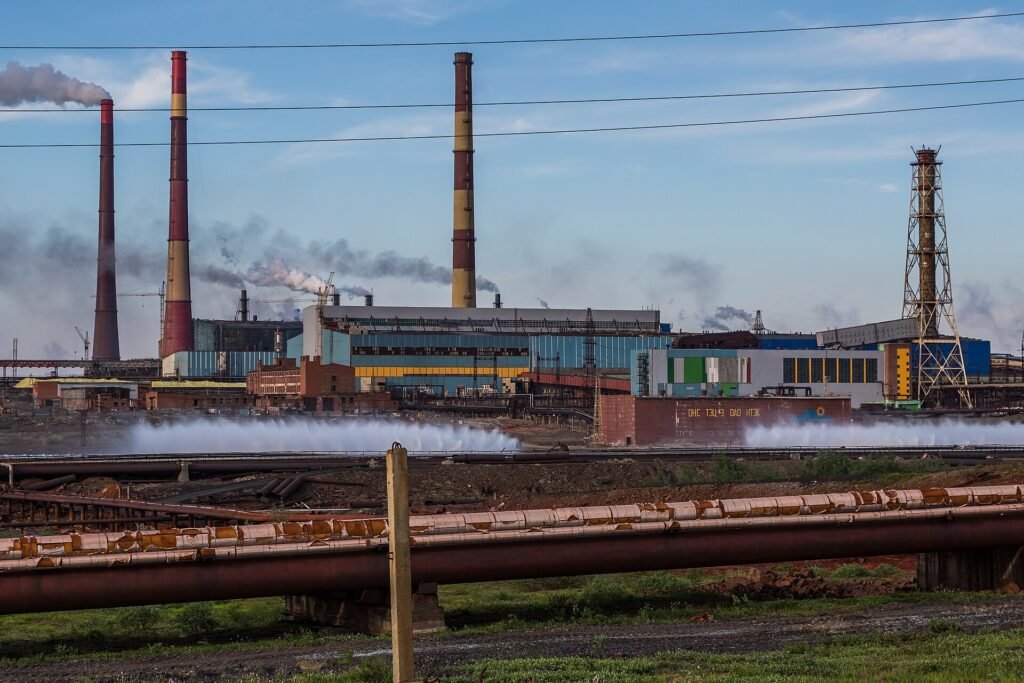

Do you know what Russian oligarchs do? If not, you’re in for a treat! In this blog post, we will discuss the various activities that these billionaires engage in after the fall of the Soviet Union. We will also explore how they got their start and what kind of impact they have on the Russian economy. So, if you’re curious about Russian oligarchs, keep reading!
What Do Russian Oligarchs Do?
Oligarchs in Russia have a variety of business interests, and they are not all alike. Some are involved in oil and gas production, while others are involved in banking or telecommunications.
Examples of the richest Russian oligarch
- Vladimir Gusinsky
- Roman Abramovich
- Mikhail Fridman
- President Boris Yeltsin
- Vladimir Potanin
How Much “Dark Money” Associated With Russia Is There Globally?
A 2020 report for the Atlantic Council, a US think tank, cites estimates that Russia has about $1 trillion in so-called “dark money” hidden abroad, the largest volume of any country.
According to the report, this money “can be exploited and steered by the Kremlin for espionage, terrorism, industrial espionage, bribery, political manipulation, disinformation, and many other nefarious purposes.”
How Was The Illicit Money Created?
In Putin’s Russia, favored officials and their allies “enjoy great license to steal from the state budget, extort money from private businesses, and even orchestrate the outright seizure of profitable enterprises,” two researchers at the National Endowment for Democracy wrote in a 2018 essay.
It claims that they have amassed personal fortunes of tens of billions in this way.
Boris Nemtsov and Vladimir Milov, leaders of the Russian opposition, asserted that between 2004 and 2007, $60 billion was moved from the funds of energy giant Gazprom to Putin’s allies.
People close to Putin have amassed significant money, according to the International Consortium of Investigative Journalists’ release of The Pandora Papers, and they may be aiding him in dispersing his own wealth.
Where Is The Cash Stored?
Due to favorable taxes, a large portion of this money has historically been sent to Cyprus. The island earned the moniker “Moscow on the Med” among some people.
Russian capital reportedly spent $36 billion (£27 billion) there in just 2013 alone, according to the Atlantic Council. A large portion of the money came in through shell firms, which are designed to hide the real owners.
In 2013, Cyprus was convinced by the International Monetary Fund to shut tens of thousands of bank accounts used by fictitious businesses.
Popular vacation spots include British Overseas Territories like the Cayman Islands and the British Virgin Islands.
According to research by Global Witness, Russian oligarchs held an estimated $45.5 billion (£34 billion) in these tax havens in 2018.
Some of this money travels to financial hubs like London and New York, where it can be invested and yield rewards.
According to Transparency International, Russians accused of financial crime or with ties to the Kremlin own at least $2 billion (£1.5 billion) in property in the UK.
A 2014 investigation by the Organized Crime and Corruption Reporting Project into the “Russian Laundromat” further revealed the scope of Russian money laundering. It claimed that 19 Russian banks were involved between 2011 and 2014
How Is The Cash Concealed?
Shell corporations are frequently used by Russian billionaires to conceal their “dark money” abroad.
According to the Atlantic Council report, “these oligarchs hire the best lawyers, auditors, bankers, and lobbyists in the world to develop legal means to conceal and launder their funds.”
The same report notes that a serious Russian oligarch “has layers of anonymous shell companies in a score of offshore jurisdictions, and his funds move at lightning speed between them.”
The Panama Papers, which were leaked in 2016 by the International Consortium of Investigative Journalists, revealed that one corporation alone had created 2,071 phony companies for well-off Russians.
Do Russian Oligarchs Have A Monopoly On Power?
Not necessarily. In fact, many of them are simply wealthy businessmen who have been able to amass a great deal of wealth and influence. However, there is no doubt that the oligarchs wield a great deal of power within Russia and its economy.
What Do Russian Oligarchs Do With Their Money?
Most of them invest heavily in Russian businesses and industry. They also often use their money to buy up shares in major Russian companies. This gives them a great deal of control over these companies and allows them to exert significant influence over the Russian economy as a whole.
Do Russian Oligarchs Pay Taxes?
Yes, they are required to pay taxes on their income and wealth just like any other Russian citizen. However, it is widely believed that many oligarchs avoid paying taxes on a significant portion of their income and wealth. This is one of the major criticisms leveled against them.
What Do Russian Oligarchs Do With Their Political Power?
Many of them use their influence to further their own business interests. Others use their power to help shape government policy in ways that benefit themselves and their businesses. Still, others use their influence to try to advance Vladimir Putin’s political agenda. Overall, the oligarchs are a very powerful force in Russian politics.
When it comes to raw power, there are few groups more influential than the Russian oligarchs. These wealthy businessmen have a great deal of control over the Russian economy and can exert significant influence over government policy.
Whether they use their power for good or for ill is up to them. But one thing is certain: the oligarchs are a force to be reckoned with.
Articles You Might Enjoy Reading
Everything You Need To Know About Andrei Skoch
Anatoly SedAbramove Great Russian Oligarch