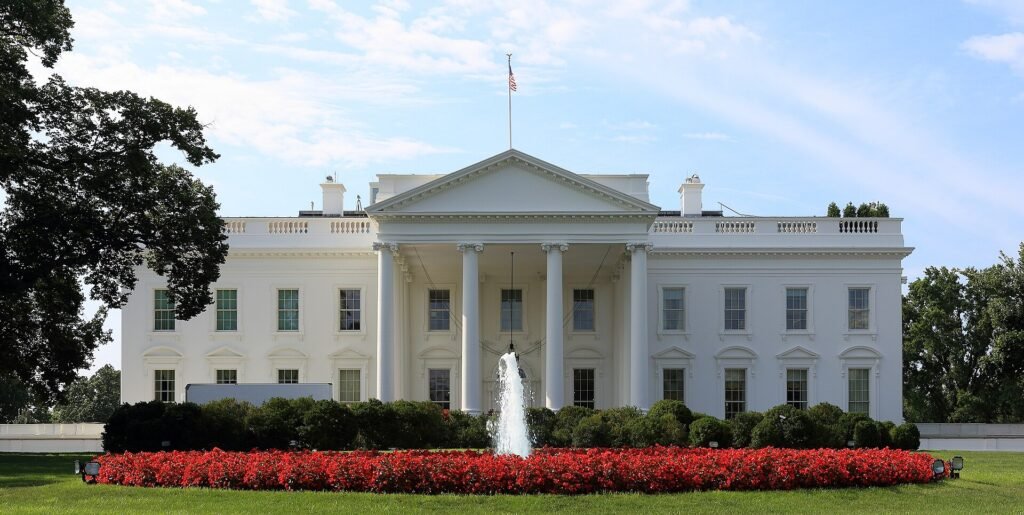

On 28 April 2022, President Joe Biden asked Congress for new powers to seize the assets of sanctioned Russian oligarchs and to use the proceeds for Ukraine. A day earlier, the House of Representatives had passed its own bill on the same subject. This article sets out what the White House proposed, what the House actually voted on, and which parts became law.
- 27 April 2022: The House passes H.R. 6930, the Asset Seizure for Ukraine Reconstruction Act, by 417 votes to 8. The Senate never takes it up.
- 28 April 2022: The White House sends Congress a legislative package on oligarch assets.
- 29 December 2022: Biden signs a law that allows the Attorney General to transfer forfeited oligarch assets to the State Department for Ukraine.
- February 2023: The Justice Department authorizes the first transfer, $5.4 million forfeited from Konstantin Malofeyev.
- 24 April 2024: The REPO for Ukrainians Act passes. It covers Russian state assets, not the private wealth of oligarchs.
What Biden proposed in April 2022
The White House published the proposal on 28 April 2022, together with a supplemental funding request for Ukraine. Its fact sheet called it a “comprehensive legislative package” that would “enhance the United States Government’s authority to hold the Russian government and Russian oligarchs accountable for President Putin’s war against Ukraine.” It was drafted with the Departments of the Treasury, Justice, State and Commerce. The package contained these proposals:
- A streamlined administrative process, run by Treasury and Justice, to forfeit property in the United States that is owned by sanctioned Russian oligarchs and connected to specified unlawful conduct.
- A new criminal offense, making it unlawful to “knowingly or intentionally possess proceeds directly obtained from corrupt dealings with the Russian government.”
- Authority to use forfeited funds to remediate the harm that Russian aggression has caused Ukraine.
- Forfeiture of property used to facilitate sanctions evasion. Until then, the government could forfeit the proceeds of sanctions violations, but not the property used to commit them.
- Sanctions evasion added to the definition of “racketeering activity” under the RICO Act.
- A ten-year statute of limitations, up from five years, for money laundering prosecutions based on foreign offenses.
- Easier enforcement of foreign freezing and forfeiture orders in the United States.
Biden presented the package on the same day he asked Congress for about $33 billion in military, economic and humanitarian aid for Ukraine through September 2022.
Where things stood in spring 2022
By then, the United States and its allies had sanctioned hundreds of Russian officials and dozens of oligarchs and their families. The White House fact sheet listed what had been done to trace their assets:
- In March 2022, Treasury and the Justice Department launched the Russian Elites, Proxies, and Oligarchs (REPO) Task Force with international partners to coordinate the freezing and seizing of Russian assets.
- EU member states had reported freezing more than $30 billion in assets, including almost $7 billion in boats, helicopters, real estate and artwork.
- Treasury had blocked vessels and aircraft worth more than $1 billion and frozen hundreds of millions of dollars held by Russian elites in U.S. bank accounts.
- After criminal charges, Treasury designated a global sanctions evasion network associated with Konstantin Malofeyev.
- At the request of the United States, Spain seized a 255-foot yacht of the sanctioned oligarch Viktor Vekselberg, valued at $90 million.
Days earlier, the United States had also asked Fiji to seize a superyacht linked to a Russian oligarch. In a video address to leaders of the International Monetary Fund and the World Bank, Ukrainian President Volodymyr Zelenskyy had called for frozen Russian assets to be used to rebuild Ukraine and to compensate other countries for their losses. Treasury Secretary Janet Yellen said at the time that such steps would need authorization from Congress, Al Jazeera reported. According to the same report, World Bank President David Malpass put the damage to buildings and infrastructure in Ukraine at more than $60 billion. The IMF’s World Economic Outlook of April 2022 expected Ukraine’s economy to shrink by 35 percent in 2022.
What Congress did with it
The House acted one day before the White House proposal. On 27 April 2022 it passed H.R. 6930, the Asset Seizure for Ukraine Reconstruction Act, by 417 votes to 8, with 4 members not voting (Roll Call 130). Representatives Tom Malinowski (D-NJ) and Joe Wilson (R-SC) had introduced it on 3 March 2022.
Despite its title, the bill as passed gave the President no new power to seize anything. Its Section 2 is a “sense of Congress”, a statement of opinion without legal force. It says that the President “should take all constitutional steps to seize and confiscate assets” of sanctioned foreign persons whose wealth comes partly from corruption linked to, or political support for, Vladimir Putin’s regime. Property worth more than $2 million belonging to such persons or to Russian energy companies should be confiscated, and the proceeds should benefit the people of Ukraine: reconstruction, humanitarian aid, Ukraine’s security forces, refugees, tools against Russian internet censorship, and aid for the Russian people.
The binding parts were procedural. Section 3 required an interagency working group, headed by the Secretary of State, to find constitutional ways to carry out such seizures. Section 4 required a report to Congress within 60 days, and Section 5 a report on whether to sanction further members of the Russian Duma and Federation Council. Some news reports at the time called H.R. 6930 a “non-binding resolution”. It was a bill, and only its Section 2 was non-binding.
Eight members voted against it, four Democrats and four Republicans: Cori Bush (D-MO), Alexandria Ocasio-Cortez (D-NY), Ilhan Omar (D-MN), Rashida Tlaib (D-MI), Madison Cawthorn (R-NC), Marjorie Taylor Greene (R-GA), Thomas Massie (R-KY) and Chip Roy (R-TX).
The Senate received the bill on 28 April 2022 and referred it to its Committee on Foreign Relations. The committee never acted on it, and H.R. 6930 expired with the 117th Congress without becoming law (all actions).
What happened next
One part of the White House request did become law, in a narrower form. On 29 December 2022, Biden signed the Consolidated Appropriations Act, 2023 (Public Law 117-328). Section 1708 of its Division M allows the Attorney General to transfer to the Secretary of State the proceeds of forfeited property “to provide assistance to Ukraine to remediate the harms of Russian aggression towards Ukraine.” It covers property that belonged to persons under U.S. sanctions or was involved in violating the Russia sanctions, and it applied to property forfeited on or before 1 May 2025.
The first use followed in early 2023. In a fact sheet of 23 February 2023, the Justice Department said it had authorized the transfer of $5.4 million, judicially forfeited from the sanctioned oligarch Konstantin Malofeyev, to the State Department to support reconstruction in Ukraine. Deputy Attorney General Lisa Monaco told the Senate Judiciary Committee on 19 April 2023 that this was the first transfer under the new law (written statement).
The REPO for Ukrainians Act, signed on 24 April 2024 as part of Public Law 118-50, deals with a different pool of money: the sovereign assets of the Russian state, such as central bank reserves. It does not cover the private wealth of oligarchs. How individual yachts and properties were frozen and seized is covered in Do Russian Oligarchs Have Their Property Seized?
Sources
- The White House: Fact Sheet: President Biden’s Comprehensive Proposal to Hold Russian Oligarchs Accountable, 28 April 2022 (via The American Presidency Project)
- U.S. Congress: H.R. 6930, Asset Seizure for Ukraine Reconstruction Act, as passed by the House; actions on H.R. 6930
- Clerk of the U.S. House of Representatives: Roll Call 130, 27 April 2022
- Public Law 117-328, Consolidated Appropriations Act, 2023, Division M, Section 1708
- U.S. Department of Justice: Fact Sheet: Justice Department Efforts in Response to Russia’s February 2022 Invasion of Ukraine, 23 February 2023
- U.S. Department of Justice: Statement of Deputy Attorney General Lisa O. Monaco, Senate Judiciary Committee, 19 April 2023
- U.S. Congress: H.R. 815, including the REPO for Ukrainians Act (Public Law 118-50)
- Al Jazeera: Biden seeks powers to use Russian oligarchs’ assets for Ukraine, 28 April 2022
Articles You Might Enjoy Reading
Who Are The Russian Oligarchs Sanctioned?
Could Undermine Sanctions Benefit Russian Oligarchs?